

 Phoenix 24
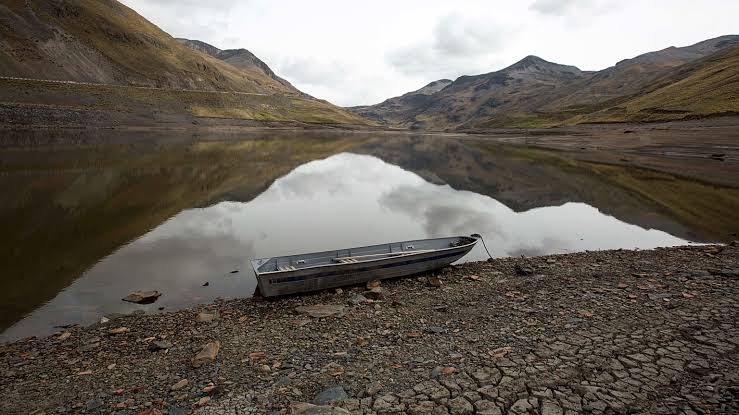
LA PAZ, BOLIVIA — November 1, 2026. Bolivia has declared a national emergency as a severe drought affects more than 114,000 families, while authorities prepare for potentially destructive floods and other extreme weather events associated with the 2026–2027 El Niño phenomenon. President Rodrigo Paz signed Supreme Decree 5759 on October 31, establishing a national framework to coordinate disaster prevention, emergency assistance and recovery efforts. The decision reflects growing concern over the vulnerability of agricultural communities, water supplies and rural livelihoods as the country approaches its rainy season.
The latest figures released by Bolivia’s Ministry of Defense indicate that 114,048 families have experienced consequences from the drought in 63 municipalities across six departments. Of those households, 78,217 are classified as affected because water shortages have disrupted their activities and living conditions, while another 35,831 are considered disaster-stricken after suffering direct losses to their livelihoods. The data, covering June 1 through October 29, also identify 1,486 affected communities, demonstrating that the emergency extends beyond isolated areas. Oruro, La Paz, Chuquisaca, Cochabamba, Santa Cruz and Potosí are among the departments included in the government’s latest assessment.
The economic and social consequences are already substantial. Defense Minister Ernesto Justiniano reported damage to approximately 167,511 hectares of agricultural land, including 60,106 hectares classified as lost, alongside the reported loss of 75,013 head of livestock. These figures reveal the severity of the crisis for families whose income and food security depend on farming and animal production. In rural Bolivia, insufficient rainfall can simultaneously reduce crop yields, weaken livestock production and increase the cost of obtaining water, placing additional pressure on communities with limited financial resources.
The emergency declaration was recommended by the National Council for Disaster Risk Reduction and Emergency Response, known as CONARADE, through Resolution 014/2026, issued on October 30. The subsequent presidential decree invokes Bolivia’s Law 602 on Risk Management and recognizes both the drought already affecting the country and the possibility of additional hazards. Its provisions cover frost, hailstorms, forest fires, floods, sudden river surges and overflowing waterways, allowing national authorities to coordinate preventive and emergency measures with departmental and municipal governments. The decree also establishes a legal basis for activating contingency financing mechanisms, although the availability and allocation of additional resources will depend on the necessary administrative processes.
President Paz emphasized that his administration intends to act before the anticipated weather conditions produce further damage. In a public message, he called for cooperation among government agencies, regional authorities, security institutions and international partners, acknowledging that the country could experience severe drought in some regions and destructive rainfall in others. His warning reflects the different climatic conditions affecting Bolivia’s geography, where the Altiplano, inter-Andean valleys, Chaco and eastern lowlands can respond differently to changes in atmospheric circulation. Authorities have therefore identified preparedness as an essential component of the national response rather than relying exclusively on assistance after disasters occur.
El Niño is a recurring climate phenomenon associated with unusually warm sea-surface temperatures in the central and eastern equatorial Pacific Ocean and changes in atmospheric circulation. These conditions can influence rainfall and temperature patterns across different parts of the world, sometimes increasing the likelihood of drought in one region while contributing to heavy precipitation elsewhere. However, the effects are not uniform or inevitable, and their severity depends on additional weather conditions, geography and local vulnerability. In Bolivia, the current concern involves existing water shortages in the highlands and valleys alongside the possibility of intensified rainfall and flooding in other areas as the November-to-March rainy season develops.
The implications extend beyond immediate agricultural losses. Prolonged drought can affect drinking-water availability, livestock health, local food markets and the ability of families to sustain their economic activities, particularly in areas where water storage and irrigation infrastructure are limited. Future flooding could create different challenges, including damage to roads, bridges, housing and public services, while complicating humanitarian access to remote communities. These combined risks underscore the importance of coordinated water management, early-warning systems and reliable local information for decisions involving agricultural production, emergency transportation and public health.
The situation also presents a significant challenge for Bolivia’s public finances and institutional capacity. Responding to simultaneous or successive climate emergencies requires resources for water distribution, agricultural support, infrastructure protection and assistance to vulnerable populations. The national declaration creates a mechanism for coordinating these responsibilities, but its effectiveness will depend on how quickly resources reach affected areas and whether authorities can anticipate changing conditions. International cooperation may provide additional technical and financial support, although the government has not established a definitive public estimate of the total economic losses or the funding required for the complete response.
Bolivia’s experience reflects a broader development challenge confronting countries exposed to climate variability: environmental hazards can produce disproportionately severe consequences where economic vulnerability, infrastructure limitations and dependence on natural resources intersect. El Niño is a naturally occurring phenomenon, and the current emergency should not be attributed exclusively to long-term climate change without specific scientific analysis. Nevertheless, changing climate conditions and the vulnerability of existing water and agricultural systems make adaptation and disaster-risk reduction increasingly important public-policy priorities. Strengthening reservoirs, irrigation efficiency, weather monitoring and community preparedness can help reduce future exposure, although these measures require sustained investment beyond a single emergency period.
As Bolivia enters November, the immediate priority is assisting families already suffering from water shortages while preparing for the possibility of additional extreme weather events. The government’s latest figures demonstrate that the emergency is not merely a forecast: agricultural losses, livestock deaths and disruptions affecting more than 114,000 households have already been reported. Supreme Decree 5759 provides the institutional framework for a coordinated response, but the decisive test will be its implementation across municipalities and communities confronting different environmental threats. The unfolding crisis illustrates why effective disaster management depends not only on responding to natural hazards, but also on protecting the livelihoods and productive systems that enable vulnerable populations to recover.
Phoenix24: Beyond the climate, the human consequences. / Más allá del clima, las consecuencias humanas.