

 Phoenix 24
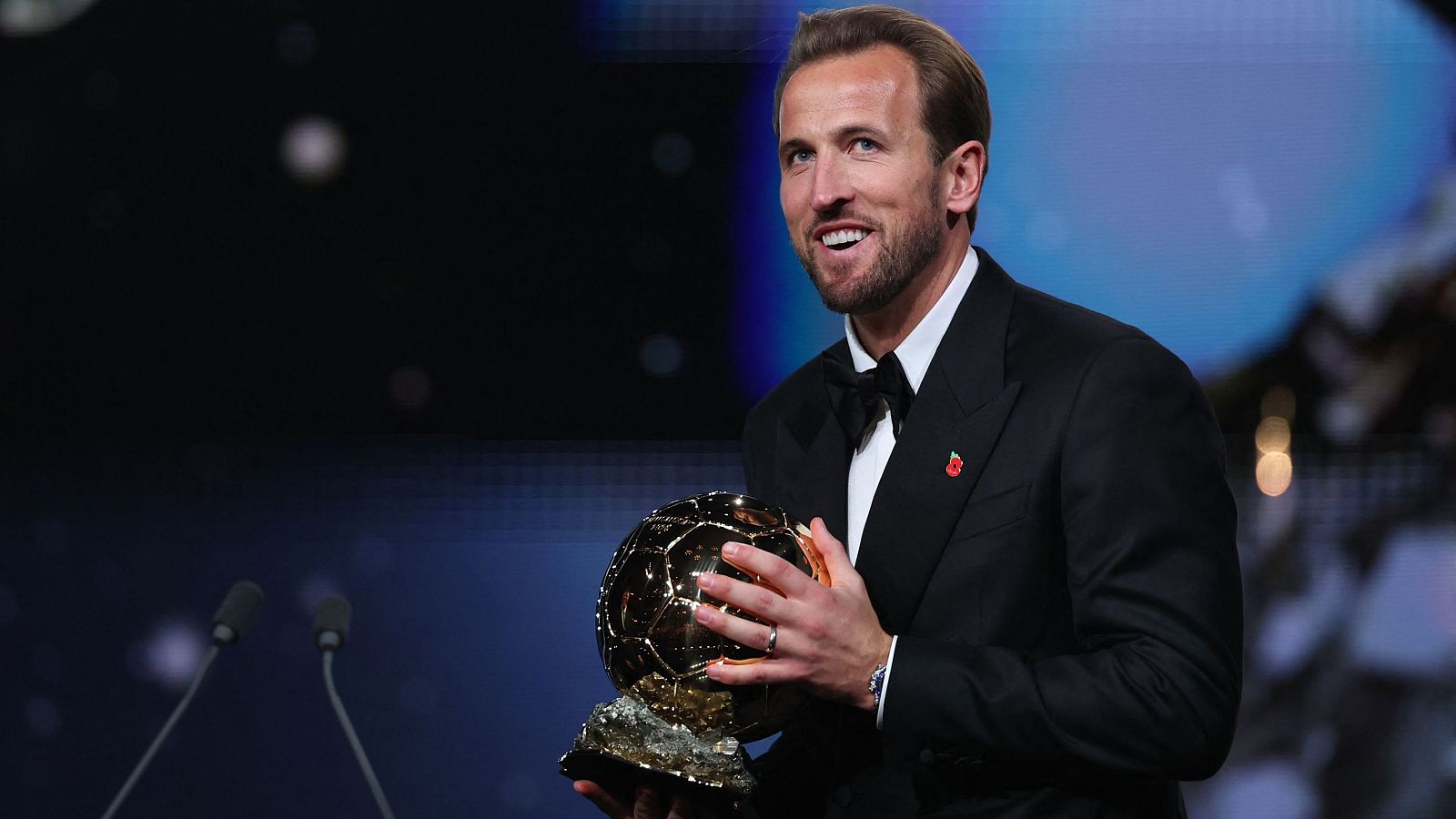
From years of frustration to football’s highest individual honor.
LONDON, UNITED KINGDOM.
Harry Kane has reached the summit of world football after winning the 2026 Ballon d’Or, completing a remarkable transformation from a prolific striker frequently questioned about his lack of major trophies into one of the game’s most decorated and influential forwards. The England captain received the award in London on October 26 following an extraordinary season with Bayern Munich and the national team, becoming the first English player to claim the distinction since Michael Owen in 2001.
The recognition follows a campaign in which Kane scored 73 goals in 65 appearances for club and country, establishing one of the most productive seasons in modern football. His performances combined individual consistency with collective achievements, including another Bundesliga title and the German Cup. For a player whose career had long been defined by outstanding scoring records without equivalent team success, the award marks a significant change in how his accomplishments are recognized.
At Bayern Munich, Kane delivered 61 goals in 51 competitive appearances during the 2025/26 season. The figure established a personal club record and placed him well ahead of other leading scorers in Europe’s five major leagues. Only Gerd Müller, who scored 66 goals for Bayern in the 1972/73 campaign, has recorded a higher single-season total for the German club in the Bundesliga era.
The distribution of those goals illustrates the breadth of Kane’s contribution. He scored 36 times in the Bundesliga, ten times in the German Cup, 14 times in the UEFA Champions League and once in the German Supercup. His performances demonstrated consistency across domestic and international competitions rather than dependence on a single tournament or a concentrated period of form.
In the Bundesliga, Kane secured the scoring title for the third consecutive season, becoming the first player to finish as the league’s leading scorer in each of his first three campaigns in Germany. The achievement placed him alongside historical figures such as Gerd Müller and Robert Lewandowski, whose goalscoring records have shaped expectations for elite strikers in German football.
His contribution to Bayern’s domestic cup triumph was particularly significant. Kane scored a hat-trick in the 3-0 final victory over Stuttgart, becoming only the fourth player to register three goals in a German Cup final. The performance represented an unusual combination of individual brilliance and decisive influence in a major title match.
That distinction matters because criticism of Kane’s earlier career frequently centered on the absence of team trophies rather than questions about his technical ability or scoring consistency. At Tottenham Hotspur, he became the club’s all-time leading scorer but did not win a major senior trophy. His move to Bayern in 2023 was therefore interpreted partly as an attempt to convert exceptional personal statistics into collective success.
The transition was not immediate. Kane’s first season in Germany produced remarkable individual numbers but ended without a major trophy, extending a narrative that had followed him throughout his professional career. His subsequent achievements have altered that perception, demonstrating how a player’s historical reputation can change when individual production becomes associated with championship victories.
The Champions League provided another important dimension to his 2025/26 campaign. Kane scored 14 goals in the competition, finishing one behind Kylian Mbappé. He also found the net in six consecutive knockout-stage matches, equaling a record previously established by Cristiano Ronaldo. Bayern ultimately fell short of reaching the final, but Kane’s performances reinforced his standing among Europe’s most effective attacking players.
His international contribution strengthened the case for individual recognition. During the 2026 FIFA World Cup, Kane scored six goals and helped England reach the semifinals before its defeat to Argentina. The national team subsequently secured third place, achieving its strongest World Cup finish in six decades.
Kane’s World Cup performances also elevated his position in the tournament’s historical scoring rankings. With 14 goals across his appearances at World Cup finals, he drew level with Gerd Müller and moved among the competition’s most productive scorers. The achievement extended his reputation beyond domestic club football and emphasized his ability to perform in international competitions.
The combination of club and international results shaped the Ballon d’Or outcome. Kane finished ahead of other prominent contenders, including Mbappé and Lamine Yamal, after a season in which his scoring output, consistency and contribution to major team achievements proved especially significant.
He also received the Gerd Müller Trophy, recognizing his exceptional goalscoring performance. The distinction added another individual honor to a season already characterized by record-breaking statistics and major collective success.
Yet Kane’s achievement cannot be understood through goals alone. His development as a center-forward has increasingly involved responsibilities extending beyond finishing attacks. At Bayern, he frequently contributes to the construction of offensive moves, drops into deeper positions to connect midfield and attack, and creates opportunities for teammates through precise passing and positional awareness.
These qualities distinguish his profile from that of a conventional penalty-area specialist. Kane combines the instincts of an elite goalscorer with an ability to participate in the broader organization of attacking play. His movement can draw defenders away from central areas, creating opportunities for teammates to exploit spaces that emerge behind defensive lines.
This versatility has become particularly relevant under Bayern manager Vincent Kompany. The team’s attacking structure depends on coordinated movement, positional flexibility and the ability to progress quickly through different areas of the pitch. Kane’s contribution involves both the final action and the sequences that make scoring opportunities possible.
The effectiveness of that relationship is reflected in Bayern’s collective performance. The club has benefited from a striker capable of delivering extraordinary individual numbers while operating within a coordinated attacking system. His success therefore represents an interaction between personal ability, tactical organization and the quality of the players surrounding him.
Kane’s career also challenges assumptions about the timing of an athlete’s greatest achievements. At 33, he has reached a level of individual recognition that eluded him during his earlier years, despite already having established himself as one of the Premier League’s most consistent forwards.
His progression illustrates how elite sporting careers do not always follow a predictable trajectory. Early recognition, individual records and international reputation may precede the collective achievements that influence how a player’s legacy is ultimately assessed. Changing clubs, adapting to different tactical requirements and maintaining physical consistency can alter that trajectory considerably.
The move from Tottenham to Bayern was especially consequential. Kane entered a new football environment, adapted to a different league and accepted the expectations associated with one of Europe’s most successful clubs. The transition involved competitive advantages, but it also introduced pressure to deliver results in a setting where domestic titles are considered fundamental objectives.
His response has been sustained production rather than reliance on isolated performances. The records established during his first three Bundesliga seasons demonstrate a level of consistency that few players have achieved immediately after transferring between major European leagues.
In September 2026, Kane became the fastest player in Bundesliga history to reach 100 league goals, accomplishing the milestone in 98 appearances. The previous record belonged to Dieter Müller, who required 129 matches. The achievement reinforced the extraordinary pace of Kane’s adaptation to German football and provided further evidence of his sustained efficiency.
For Bayern, Kane’s recognition offers benefits extending beyond the prestige of an individual award. International honors strengthen the club’s visibility, reinforce its position as a destination for elite talent and contribute to the commercial appeal associated with globally recognized players.
Nevertheless, the significance of the Ballon d’Or should not be reduced to marketing value. Individual awards reflect a combination of performances, collective results and judgments about sporting excellence. Their meaning depends partly on the historical context in which they are awarded, including the competitive standards established by previous winners.
For English football, Kane’s victory carries particular symbolism. Michael Owen was the last English recipient in 2001, making the intervening 25 years a prolonged period without an English winner despite the country’s substantial influence in international football. Kane’s achievement ends that sequence and places him within a distinguished group of English players recognized at the highest individual level.
It also creates a notable contrast with the criticism that followed him during the later years of his Tottenham career. The absence of major trophies was frequently used to qualify assessments of his achievements, even as he accumulated goals and individual distinctions. His subsequent success demonstrates the limitations of evaluating a player’s ability exclusively through the number of championships won.
Team trophies depend on collective performance, organizational resources and competitive circumstances. Individual ability can influence those outcomes substantially, but it cannot determine them independently. Kane’s career provides an example of how exceptional personal contributions can exist for years before the surrounding conditions produce major titles.
The Ballon d’Or now places his achievements within a different framework. He is no longer solely the prolific striker seeking the collective success that had escaped him. He is a decorated international footballer whose scoring records, versatility and sustained performances have received the sport’s highest individual recognition.
The challenge ahead will be maintaining that standard as Bayern continues competing domestically and in Europe. Football offers little opportunity to preserve success without renewed performance, and Kane’s future achievements will depend on his physical condition, the team’s competitive development and his ability to adapt as the demands of elite competition evolve.
His current recognition, however, is already established. The 2026 Ballon d’Or represents the culmination of a season that combined exceptional individual production with team success and international influence.
Harry Kane’s journey from Tottenham’s leading scorer to Bayern Munich’s record-breaking forward illustrates how sporting legacies develop through more than statistics alone. His career has been shaped by persistence, adaptation and the gradual alignment of individual excellence with collective achievement.
What once appeared to be an unresolved chapter in his professional story has become one of its defining transformations. After years of extraordinary goalscoring without the trophies that often determine football’s historical narratives, Kane has reached a summit that recognizes both the scale of his talent and the achievements that now accompany it.
Beyond the Headlines, the Pattern.