

 Phoenix 24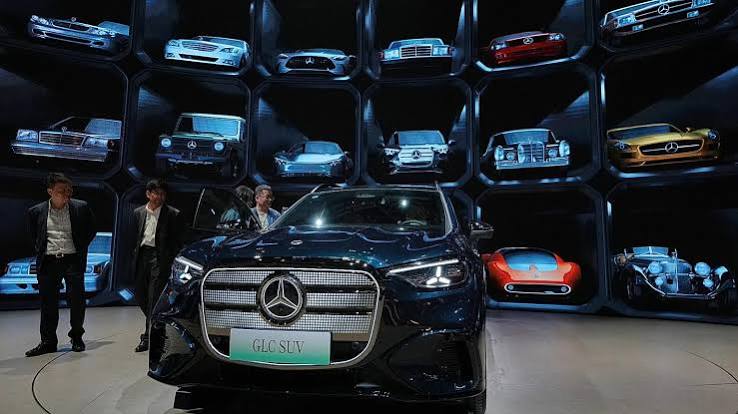
China weakens the balance sheet while electrification accelerates elsewhere.
Stuttgart, Germany
Mercedes-Benz reported a 6 percent decline in global sales during the third quarter of 2026, delivering 491,700 cars and vans as weakness in China outweighed stronger performance in Europe and North America. Passenger-car sales alone fell 8 percent year on year to 407,200 units. The result immediately pressured the company’s shares and reinforced concerns about one of the German manufacturer’s most important markets. Yet the same quarter also delivered the strongest battery-electric vehicle sales in Mercedes-Benz history.
China remains the central weakness. Mercedes-Benz car sales in the country fell 31 percent compared with the same period a year earlier, while total sales across Asia declined 25 percent. The contraction follows another sharp decline in the previous quarter, underlining how intense competition, softer demand and rapid changes in the Chinese automotive market are reshaping the company’s global performance. China still represents a crucial part of Mercedes-Benz’s international business, making any prolonged weakness there strategically significant.
Outside China, the picture is considerably stronger. Group sales rose 2 percent, while passenger-car sales increased 1 percent, marking a third consecutive quarter of growth outside the Chinese market. Europe recorded a 5 percent increase in passenger-car sales, supported by gains in Germany and the United Kingdom. North America also expanded, with Mercedes-Benz Cars sales rising 4 percent and U.S. deliveries increasing 6 percent.
The most important countertrend is electrification. Global battery-electric vehicle sales surged 61 percent year on year to 68,400 units, while fully electric cars reached a record 16.8 percent share of Mercedes-Benz passenger-car sales. In Europe, quarterly electric sales rose 78 percent compared with the previous year. Demand for new electric versions of the GLC, CLA, GLB and GLA has been strong enough to fill order books into 2027.
That divergence creates a strategic paradox. Mercedes-Benz is accelerating successfully in electric vehicles at the same time that its overall sales remain under pressure because of China. The company is therefore confronting two transformations simultaneously: the global transition toward electrification and the rapid rise of highly competitive Chinese automakers capable of challenging established European premium brands on price, technology and speed of innovation.
The third-quarter results suggest that Mercedes-Benz’s future will depend less on whether it can sell electric cars and more on whether it can preserve global scale while doing so. Record EV demand is encouraging, but it cannot fully compensate for sustained weakness in a market as large and strategically important as China.
The transition is working, but the geography of growth is changing.