

 Phoenix 24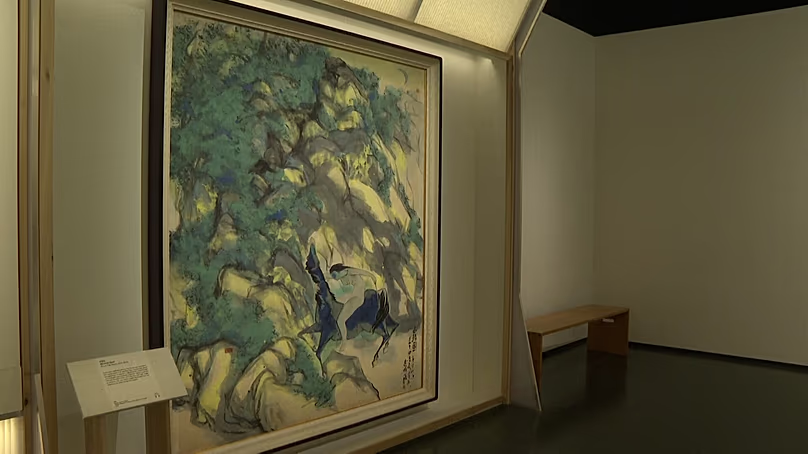
A century of global popularity rests on cultural traditions built across millennia.
London
The British Museum has opened its first major exhibition devoted to Korean art and history in more than 40 years, presenting approximately 100 objects spanning from around 300 BC to the present. The exhibition, titled Korea, is designed to show international audiences that the country’s cultural identity extends far beyond the global success of K pop, television and cinema.
The collection includes ten Korean National Treasures and another 13 officially designated treasures of major cultural and historical importance. Among the objects are a roughly 900 year old incense burner crowned by the mythical creature Girin and a Buddhist temple bell dating back about 1,000 years. Ceramics, paintings and religious objects trace how artistic traditions evolved across different dynasties and belief systems.
Buddhism and Confucianism are central to the exhibition’s narrative. The luminous blue green ceramics of the Goryeo dynasty contrast with the more restrained porcelain associated with the Joseon period, where Confucian ideals influenced aesthetics, craftsmanship and everyday objects. Together, they illustrate how spiritual and philosophical systems shaped Korean visual culture over centuries.
One of the exhibition’s central works is Clearing After Rain on Mount Inwang by the eighteenth century painter Jeong Seon. His landscapes helped move Korean painting away from idealized scenes influenced by Chinese traditions and toward representations of identifiable Korean environments. The painting therefore represents not only technical mastery but a shift toward a more distinctly local visual identity.
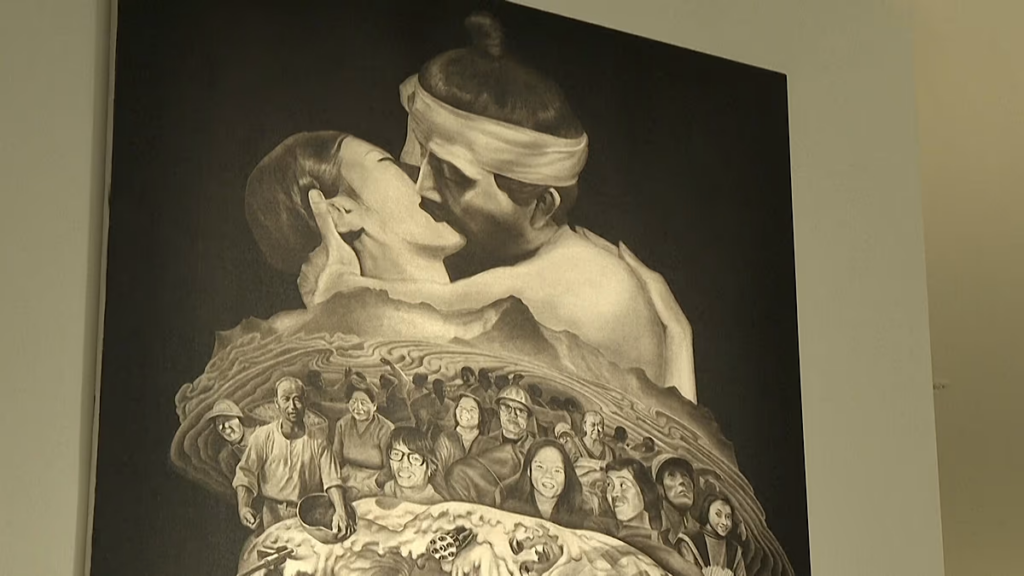
Contemporary art is also incorporated into the historical sequence. A 2018 work by Yeesookyung combines broken ceramic fragments from North and South Korea, joining them with gold leaf. The piece transforms discarded material into a meditation on fracture, continuity and cultural identity across a politically divided peninsula.
Much of the exhibition comes from the collection of the late Samsung chairman Lee Kun hee. After his death in 2020, his family donated more than 23,000 artworks to South Korea’s national museums, creating one of the most significant cultural gifts in the country’s modern history.
The exhibition arrives at a moment when Korean popular culture enjoys unprecedented international visibility. Its deeper message is that this global influence did not appear suddenly.
Contemporary Korea may be exported through music, film and technology, but behind that modern image stands a cultural history measured not in decades, but in thousands of years.
Beyond the news, the pattern.