

 Phoenix 24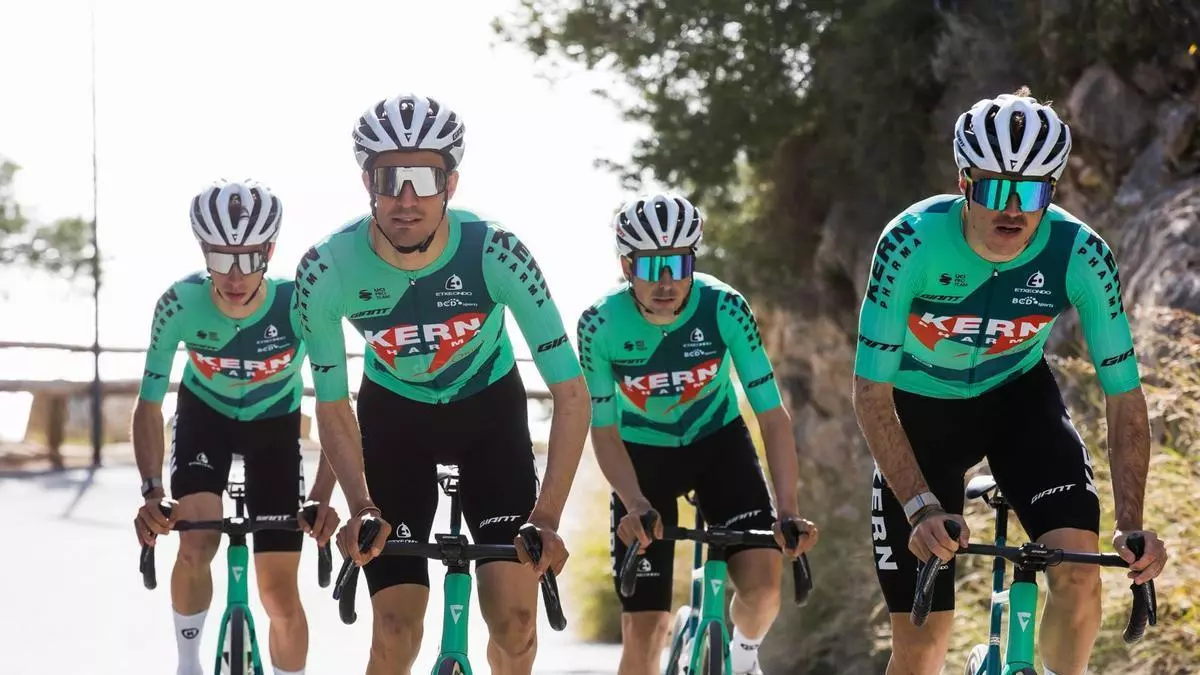
The team may disappear, but much of the talent it developed will remain in the professional peloton.
Pamplona
The uncertain future of Equipo Kern Pharma is beginning to resolve for many of its riders as several members of the Spanish ProTeam secure contracts elsewhere for 2027. The Navarre based structure is approaching the end of its current cycle after losing the pharmaceutical company that has served as its principal sponsor, leaving management unable so far to guarantee continuity at professional level next season.
The situation marks a dramatic reversal for a team that became one of Spanish cycling’s most compelling development stories. Created in 2020 from the Lizarte structure, Kern Pharma built its identity around young riders, long term development and opportunities for cyclists who might otherwise have struggled to enter the professional ranks. Its performances in the Vuelta a España transformed that development model into sporting credibility.
As the sponsorship crisis deepened, team management allowed riders and staff to negotiate with other organizations rather than wait indefinitely for a rescue. That decision has accelerated movement across the transfer market. Urko Berrade, one of the team’s most visible performers, has been linked with a move to EF Education EasyPost, while other riders have also found or are negotiating places in structures capable of preserving their professional careers.
The exodus does not necessarily represent a failure of the sporting project. In one sense, it demonstrates the opposite. Kern Pharma developed riders attractive enough to be absorbed by stronger teams even as the organization itself struggled financially. That contrast exposes one of professional cycling’s persistent vulnerabilities: sporting success does not automatically guarantee commercial sustainability.
The team’s final weeks have carried unusual emotional weight. Riders continued competing aggressively in the Vuelta a España even while knowing that the structure supporting them might disappear. Team manager Juanjo Oroz publicly acknowledged the difficulty of the situation while continuing efforts to secure the financing needed to preserve some form of the project.
The Tour de Langkawi has become the final scheduled race of the season and potentially the last appearance of Kern Pharma in its current form. What happens afterward will depend on whether new financial backing emerges.
For Spanish cycling, the loss would extend beyond one sponsor or one roster. Kern Pharma has functioned as a bridge between development cycling and the professional peloton.
Its riders are finding new destinations. The harder question is whether the pathway that developed them can survive.
Beyond the news, the pattern.