

 Phoenix 24
Formula 1’s new regulations are forcing manufacturers to rethink the balance between combustion and electricity.
Silverstone
Shintaro Orihara, Honda’s chief Formula 1 engineer, has outlined the technical complexity behind the Japanese manufacturer’s new power unit developed for Aston Martin under the 2026 regulations. The project represents a major transition for Honda as it returns to a works partnership structure with a completely redesigned hybrid system.
The new Formula 1 architecture places substantially greater emphasis on electrical energy than the previous generation. Power from the MGU-K has increased dramatically, while the MGU-H has disappeared entirely. That forces manufacturers to extract more performance from energy recovery, battery deployment and software management while simultaneously working with a combustion engine operating under tighter efficiency and fuel requirements.
Orihara has emphasized that the challenge is not simply producing maximum horsepower. The real objective is coordinating the internal combustion engine, electric motor, battery and control systems so that energy remains available across an entire lap. Poor deployment can leave a car vulnerable at the end of long straights even when its theoretical peak output is competitive.
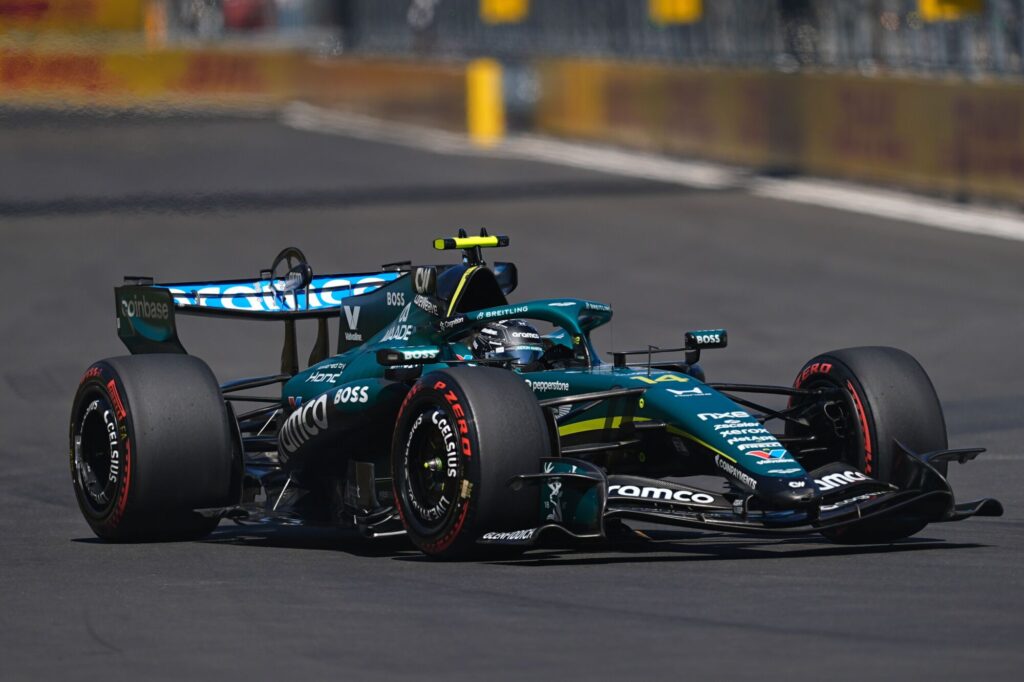
That problem has already become one of the defining characteristics of the 2026 regulations. Drivers and teams have discussed the importance of lift and coast techniques, regeneration strategies and carefully timed electrical deployment. The fastest power unit is therefore not necessarily the one producing the largest headline number, but the one capable of delivering usable performance consistently.
Honda’s partnership with Aston Martin adds another layer of complexity because the power unit and chassis are being developed within a new technical relationship. Unlike customer arrangements, a works partnership allows closer integration between engine packaging, cooling, aerodynamics and vehicle architecture. That coordination can create performance advantages, but only if development teams successfully align thousands of design decisions.
The project also carries considerable strategic importance for Aston Martin. The team has invested heavily in its Silverstone campus, aerodynamic facilities and engineering structure while recruiting high profile technical personnel. Honda’s power unit is intended to become one of the foundations of that long term ambition.
Orihara’s comments underline a larger transformation inside Formula 1. Engine development is becoming inseparable from software, energy management and systems integration.
The 2026 competition may therefore be decided not by who produces the most power, but by who understands best when and how to use every available unit of energy.
Information that anticipates futures.