

 Phoenix 24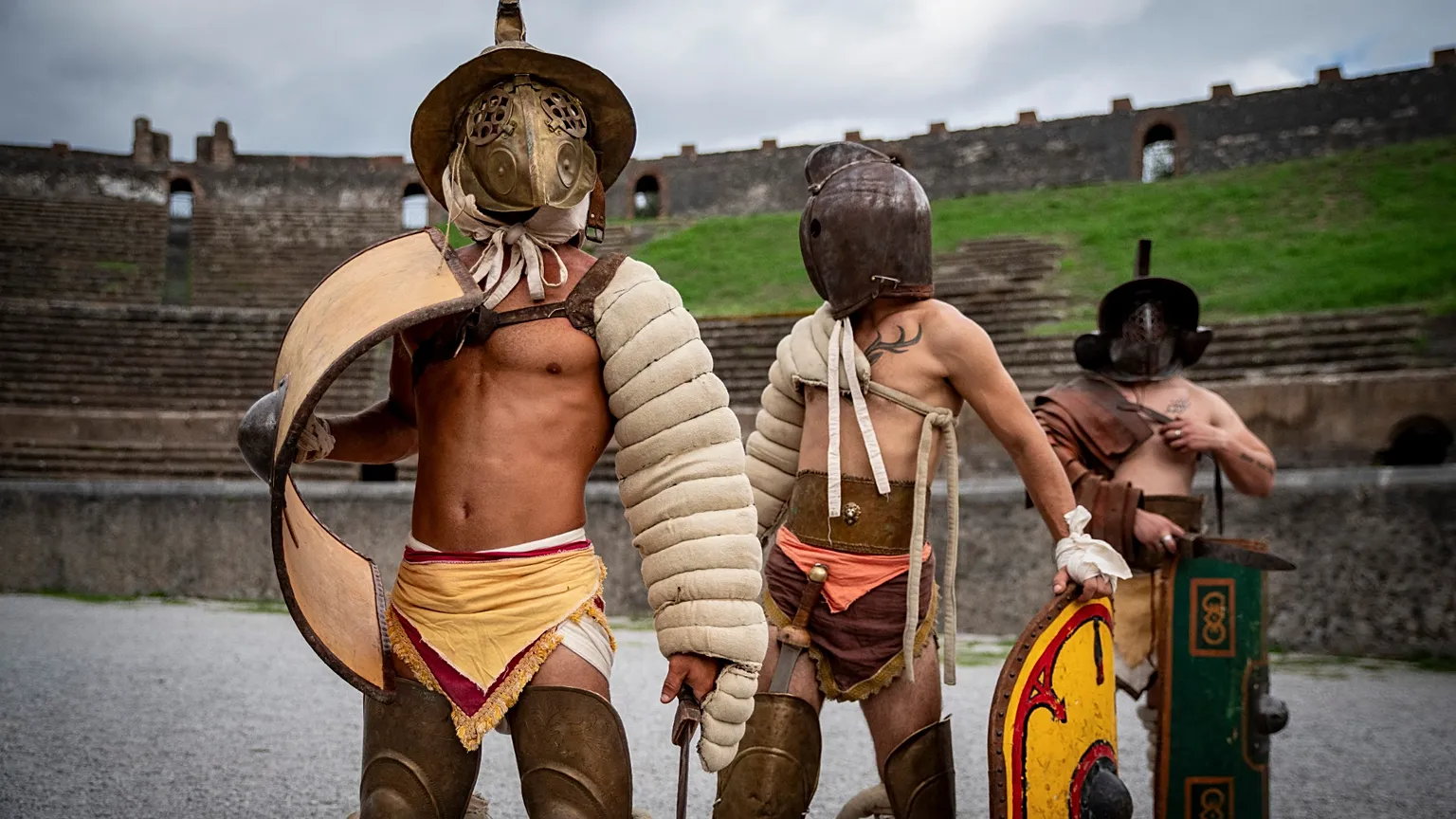
Heritage becomes more powerful when history can be experienced.
Pompeii
Pompeii is preparing to transform its archaeological landscape into a living reconstruction of first century Roman life during the European Heritage Days on September 26 and 27. The Archaeological Park will host historically grounded reenactments, practical workshops and live performances across several sites, turning the ancient city into a stage for public history. The program is part of a wider European initiative focused this year on protecting, renewing and reimagining cultural heritage. In Italy, museums and cultural institutions will also offer special openings and activities throughout the weekend.
Saturday will center on gladiatorial culture through Dies in Arena, a sequence of events designed to explain combat not simply as spectacle, but as a social and political institution of Roman life. The program begins in the Basilica with an introduction to the cultural meaning of the munus, followed by a reconstruction of the ludus, or gladiatorial school, in the Quadriportico dei Teatri. Visitors will encounter different types of fighters, armor, weapons and the internal hierarchies that organized gladiatorial training. The day will culminate in the Amphitheatre with demonstrations involving four pairs of gladiators and direct audience participation in evaluating the duels.
Sunday will shift toward the broader social world of Roman Pompeii with the third edition of the Ludi Pompeiani. The Amphitheatre will host an inaugural ceremony, a military celebration honoring Gaius Cuspius Pansa, historical dance, gladiatorial and legionary demonstrations, the ritual of manumission and a reconstruction of a Roman marriage. Educational stations near the arena will provide additional context for visitors throughout the day. The result is intended to connect monumental architecture with the human practices that once gave those spaces meaning.
The experience will extend beyond Pompeii itself. Boscoreale will offer demonstrations and workshops on weaving, cosmetics, perfumery, ancient medicine, numismatics, sculpture and seasonal products, while Stabia will stage a performance centered on the final day before the eruption. Oplontis will add activities focused on theater, music, baths, sport and gladiatorial traditions. Together, the sites create a wider interpretation of Roman daily life rather than reducing antiquity to ruins alone.
The significance of the initiative lies in that shift. Archaeology traditionally preserves what survives, but historical reenactment attempts to recover movement, ritual and social relationships that stones cannot communicate by themselves. Pompeii is therefore using performance not to replace scholarship, but to make scholarship more visible.
For one weekend, the ancient city will not merely be observed. It will be interpreted through bodies, voices, rituals and spaces once again placed in motion.
Phoenix24: periodismo sin fronteras. / Phoenix24: journalism without borders.