

 Phoenix 24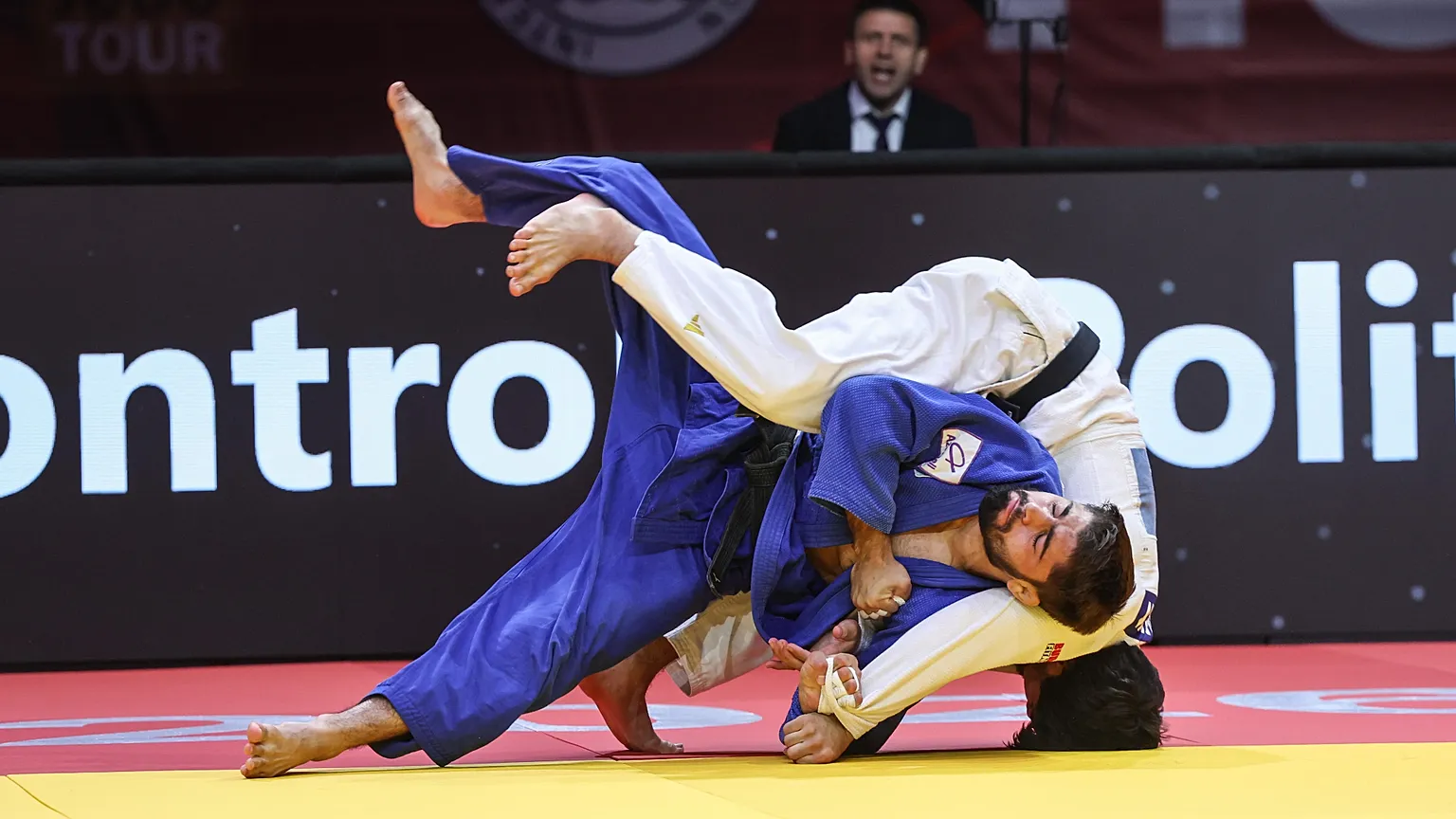
Japan secured two titles as Azerbaijan and Greece celebrated landmark victories in Budapest.
BUDAPEST, HUNGARY
Four judokas claimed gold during the second day of the Hungary Grand Slam, with contests across the women’s 63kg and 70kg divisions and the men’s 73kg and 81kg categories. The competition brought together 504 athletes representing 67 countries at the Papp László Budapest Sport Arena.
Japan’s Megu Danno defeated Slovenia’s Kaja Kajzer Zabkar in the women’s 63kg final. A closely contested bout was decided by a yuko, giving Danno her second Grand Slam title in only four appearances on the international circuit and delivering another gold medal for the Japanese delegation.
Azerbaijan’s Rashid Mammadaliyev achieved the most important victory of his career in the men’s 73kg division. Facing Sweden’s Narek Vardanian, he executed a precisely timed seoi-nage to score ippon and capture his first Grand Slam gold medal.
Elisavet Teltsidou dominated the women’s 70kg category after progressing through the preliminary rounds with consistent control. In the final, the Greek judoka scored waza-ari before securing victory through a hold-down. The result gave her a fifth Grand Slam title and confirmed her position among the division’s most accomplished competitors.
Japan completed the day with a second gold through Yoshito Hojo in the men’s 81kg final. With the contest unresolved during regulation time, Hojo produced the decisive technical action in golden score to earn the second Grand Slam victory of his career.
The event’s opening ceremony included representatives from the International Judo Federation, the Hungarian government and the Hungarian Judo Association. Competition continued with the heavier categories, where athletes sought ranking points in an event carrying significant weight within the international judo circuit.
The four finals demonstrated different routes to victory: tactical patience, explosive throwing, groundwork and composure during extra time. At Grand Slam level, technical quality matters, but the ability to recognize the brief moment when a contest can be decided remains equally important.
Victory belongs to those prepared for the moment that cannot be repeated.