

 Phoenix 24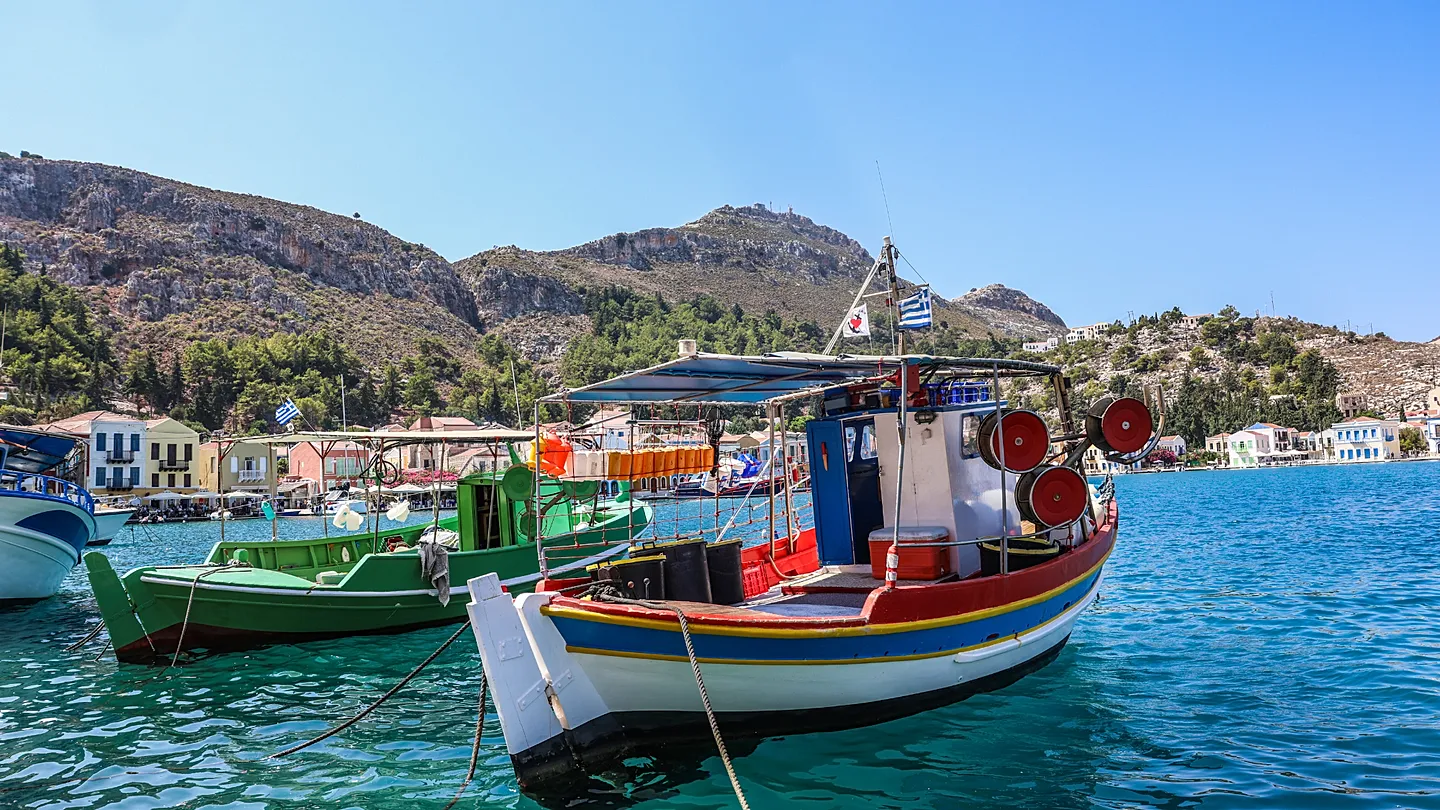
A demographic programme on the remote island also reinforces Athens’ presence near the Turkish coast.
KASTELLORIZO, GREECE
Greek Prime Minister Kyriakos Mitsotakis has announced financial incentives intended to attract permanent residents and essential workers to Kastellorizo, one of Greece’s smallest and most geographically isolated inhabited islands. The initiative responds to population decline, limited public services and the difficulty of retaining families and professionals.
Households that live on the island for at least one complete year will become eligible for an annual payment of €5,000. The tax-free allowance, which cannot be seized to cover debts, will increase by €1,000 for every minor child. Existing permanent residents are expected to begin receiving payments in early 2027.
A separate permanent salary supplement of €5,000 per year will be offered to public-sector employees, members of the security services and military personnel stationed on Kastellorizo. The measure seeks to address persistent shortages of teachers, doctors and other professionals for whom distance, expensive housing and irregular transport connections make long-term service difficult.
The government is accompanying the incentives with 37 infrastructure projects valued at approximately €27 million. Planned investments include housing, port improvements, healthcare facilities, water and wastewater systems, energy infrastructure and repairs to public buildings. New accommodation for essential workers is particularly important because financial bonuses alone cannot overcome the island’s restricted housing supply.
Kastellorizo has fewer than 600 permanent residents and lies only a few kilometers from Turkey, while being separated from mainland Greece by hundreds of kilometers. Its location gives the island a geopolitical importance far greater than its population or physical size, particularly in disputes between Athens and Ankara over maritime boundaries, airspace and energy exploration in the eastern Mediterranean.
Mitsotakis emphasized that Greece threatens no neighboring country but will not accept threats against its sovereignty. In that context, attracting residents is simultaneously a demographic, economic and strategic policy. A functioning community provides continuity that military deployments or seasonal tourism cannot create alone.
The programme’s success will depend on whether employment, healthcare, education, transportation and affordable housing improve alongside the annual payments. People may be encouraged to relocate by financial assistance, but remaining permanently requires the infrastructure of an ordinary life.
Territory endures when communities are able to call it home.