

 Phoenix 24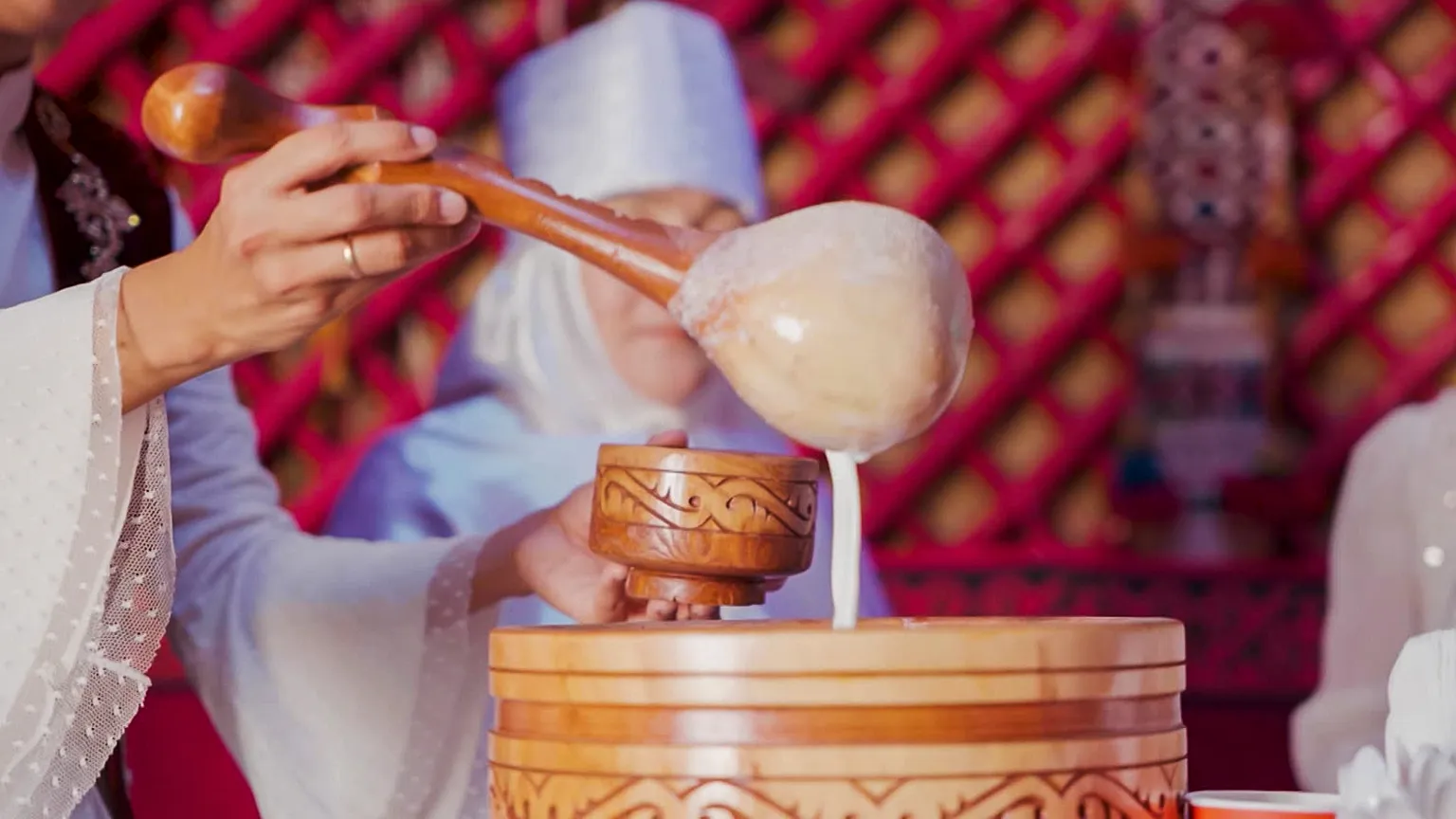
Fermented mare’s milk remains both a daily beverage and a living expression of nomadic heritage.
KAZAKHSTAN
Kymyz, a mildly alcoholic drink produced from fermented mare’s milk, has been consumed across Central Asia for thousands of years. It remains closely associated with Kazakh, Kyrgyz, Mongol, Bashkir, Kalmyk and Yakut communities, where offering it to visitors continues to represent hospitality and cultural belonging.
Evidence of its history extends deep into antiquity. Archaeologists examining pottery connected to Kazakhstan’s Botai culture found traces of horse milk alongside some of the earliest evidence of horse domestication. The Greek historian Herodotus also described Scythian methods for processing mare’s milk during the fifth century BC.
Traditional production begins with fresh mare’s milk, known in Kazakhstan as saumal. Because it remains fresh for only a few hours, it is normally consumed near the farms where it is collected. To produce kymyz, the milk is placed in a container, combined with a starter culture and repeatedly stirred while fermenting. Its flavour and strength vary according to the pasture, season, fermentation time and family recipe.
Kymyz remained important during the Soviet period, when state farms maintained large herds of mares for milk production. Demand now connects rural producers with urban consumers seeking traditional foods, while tourism has introduced the beverage to international visitors. Its continued popularity also supports horse breeding and helps preserve knowledge passed between generations.
Researchers have identified vitamins, distinctive fatty acids and potentially beneficial bacteria in mare’s milk and kymyz. These characteristics justify further nutritional study, but they should not be treated as proof that the drink cures diseases or replaces medical treatment. Its most firmly established value lies in its cultural continuity: kymyz links modern Central Asian societies with a pastoral history in which horses provided transportation, food, security and identity.
La verdad es estructura, no ruido. / Truth is structure, not noise.